
BYOD in Healthcare vs. Integrated Patient Infotainment
By Ron Arseneau, Vice President of Sales & Partnerships at LOC Medical
Over the past four decades, I’ve watched patient entertainment in Canadian hospitals evolve from basic television systems to fully integrated digital engagement platforms. Technology has advanced rapidly, but so have the operational realities inside healthcare facilities.
Today, many organizations are exploring BYOD (Bring Your Own Device) models as a way to modernize the patient experience while limiting hardware investment. On the surface, the concept is straightforward: patients already have smartphones and tablets, so why not allow them to use those devices during their stay?
However, healthcare environments are rarely straightforward. What appears efficient in theory can introduce complexity in practice.
From my experience working with hospitals across Canada, sustainable technology decisions are rarely about what seems simplest at first glance. They’re about what performs reliably in real clinical environments, under real patient conditions and within real operational constraints.
That’s why the role of BYOD in healthcare deserves careful evaluation.
Table of Contents
What is BYOD in healthcare?
BYOD in hospitals enables patients to use their personal smartphones or tablets to access entertainment, internet services and, in some cases, digital engagement tools.
While convenient, this model also raises important questions around:
- Healthcare IT infrastructure
- Network performance and cybersecurity
- Patient satisfaction and comfort
- Operational workload
- Long-term financial planning
What often gets overlooked is that personal devices are not part of managed hospital infrastructure.
The hidden risks of BYOD in healthcare
Patient experience consideration
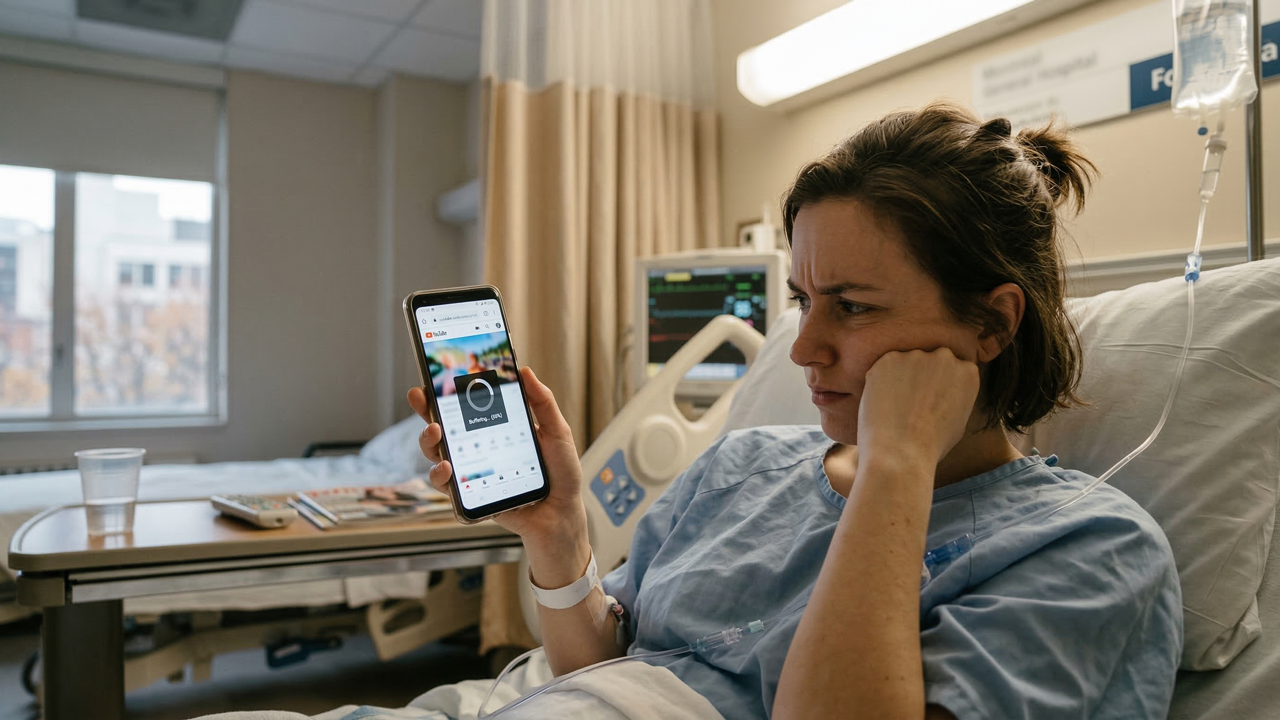
Hospital patients are not typical consumers. Many are coping with pain, fatigue, limited mobility, or emotional stress. Prolonged use of personal devices may require:
- Holding devices for extended periods
- Managing charging cables
- Navigating Wi-Fi connectivity
- Troubleshooting access issues
For certain populations (particularly seniors or longer-stay patients), this can create friction rather than comfort.
Digital engagement in healthcare should be inclusive and predictable. It should reduce stress, not introduce additional variables.
The IT and Infrastructure Impact
Supporting a BYOD environment at scale requires more than open Wi-Fi. It often involves:
- Network segmentation
- Firewall management
- Ongoing cybersecurity monitoring
- Expanded bandwidth capacity
- Policy enforcement and device isolation
In some cases, capital savings from avoiding dedicated hardware may be offset by infrastructure upgrades and long-term IT resource allocation.
This does not mean BYOD in healthcare cannot work. It means it requires deliberate planning and governance.
The case for managed healthcare-grade digital infrastructure
The more strategic question is not whether patients can use their own devices. They can and often will!
The real question is whether a hospital should build its patient engagement strategy around an unmanaged and highly variable device ecosystem.
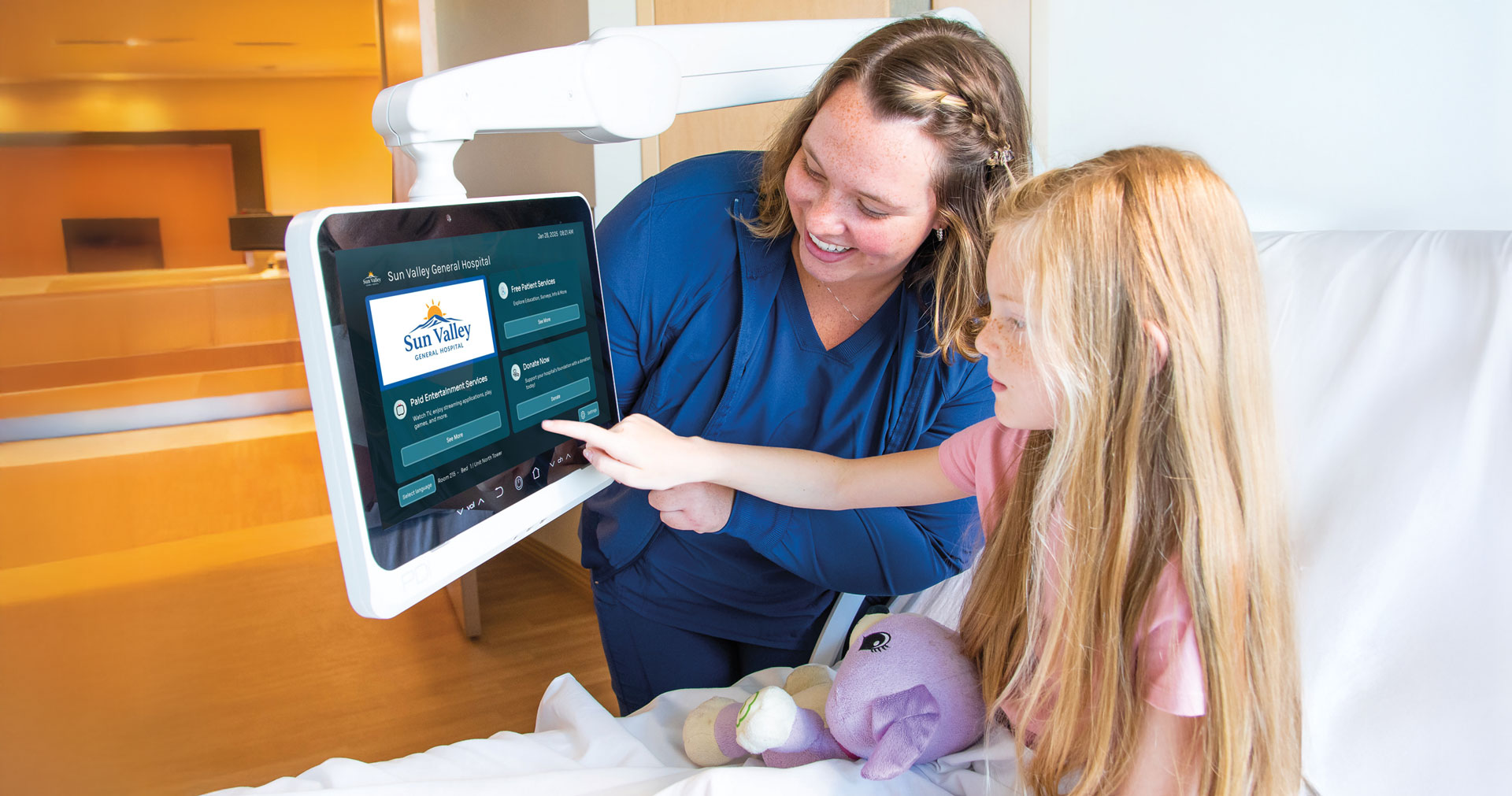
Managed healthcare-grade solutions are purpose-built for clinical environments, including integrated bedside terminals, secure hospital-issued mobile devices or hybrid models. Unlike personal devices, these systems operate within controlled network environments, with centralized management, defined security protocols and predictable performance.
Managed healthcare-grade solutions provide:
- Equitable access for all patients
- Consistent user experience
- Centralized support and monitoring
- Integration with hospital systems
- Scalability as digital initiatives evolve
Importantly, mobility does not have to mean BYOD. Hospital-managed wireless tablets can deliver comparable flexibility while remaining securely governed within hospital IT frameworks.

The ideal solution for the Canadian healthcare system: a balanced approach
For some organizations, BYOD may form part of a broader strategy. For others, a hybrid approach (combining personal device access with managed hospital-issued devices) provides greater equity and operational stability.
Successful healthcare organizations are not looking for shortcuts. They are looking for solutions that balance:
- Patient equitability & comfort
- IT governance
- Operational sustainability
- Financial predictability
In today’s healthcare environment, digital engagement must be reliable, secure and accessible to every patient, without depending on battery life, personal data plans or network congestion.
| Criteria | BYOD in Healthcare | LOC Medical Integrated Solutions |
|---|---|---|
|
Hardware investment
|
Lower visible upfront hardware cost
|
Structured capital or managed investment model |
|
Total cost of ownership |
Costs shift to IT upgrades, security and support |
Predictable lifecycle planning and controlled expenses |
|
Software & revenue opportunities
|
Limited monetization options |
Integrated software platforms enabling
new revenue sources such as TV subscriptions and value added patient services
|
|
Patient comfort |
Dependent on personal device usability |
Designed for recovery conditions and ease of use |
|
Device management |
Patient responsibility
|
Fully managed by hospital and LOC Medical
|
|
Charging & handling
|
Cables, battery life, patient dependent
|
Fixed bedside or centrally managed mobile fleet
|
|
Network load
|
High and unpredictable streaming demand
|
Not WiFi dependent. Controlled bandwidth and optimized integration
|
|
Cybersecurity & compliance
|
Increased exposure from personal devices
|
Secured environment with structured access controls
|
|
IT workload
|
Higher troubleshooting and monitoring
|
Reduced burden through managed infrastructure
|
|
Operational impact
|
Added complexity for clinical and support teams
|
Streamlined workflows aligned with hospital operations
|
|
Scalability & evolution
|
Limited control over future expansion
|
Solutions designed to evolve with new technologies
|
|
Long-term value
|
Variable and reactive
|
Sustainable, well-planned and partnership-driven
|
|
Entertainment options
|
Limited to personal streaming subscriptions
|
Integrated IPTV, Educational content, Internet access
|
|
Nurse call integration
|
Not integrated
|
Integrated functionality
|
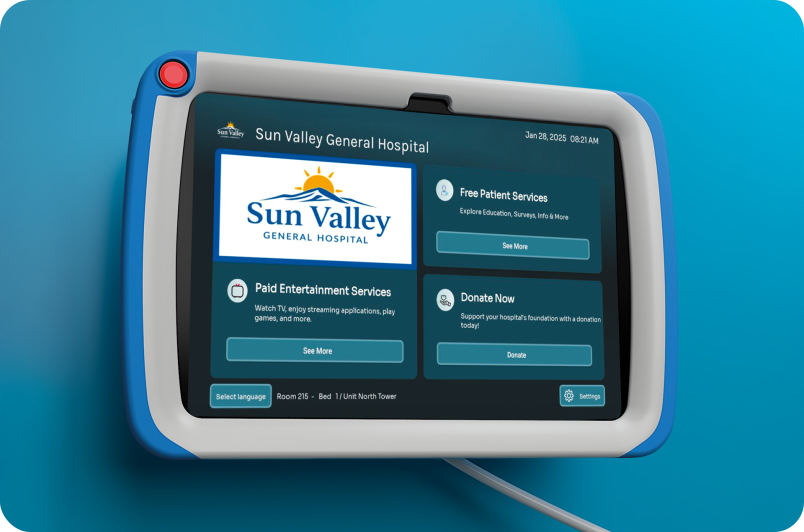
Enhance the patient journey with our managed mobile solutions
A low-cost, high-impact patient engagement solution for hospitals, small clinics and care centers.